

The year is 2026, and the “Automation Anxiety” that began with the release of Large Language Models has reached a fever pitch.
We have seen AI agents take over basic coding, routine accounting, and entry level copywriting.
Yet, as the digital tide rises, certain career paths have emerged not just as “survivors,” but as high value sanctuaries.
These are the roles that form the Human Moat.
While AI excels at pattern recognition and data synthesis, it fails spectacularly when faced with the “Three Cs” of human existence, Complexity, Chaos, and Compassion.
In 2026, the most secure jobs are those that require a physical presence in unpredictable environments or a level of emotional depth that silicon simply cannot simulate.
Below is the definitive analysis of the 10 careers that remain safe from AI replacement, along with the fundamental reasons why they will remain in human hands for the foreseeable future.
THE TACTILE ARCHITECTS: SKILLED TRADES
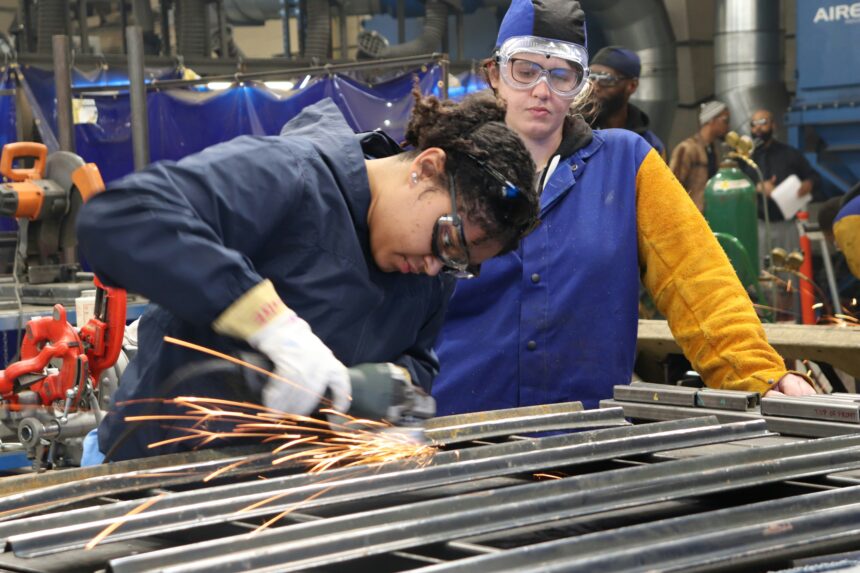
If the early 2020s were the era of the “Laptop Class,” 2026 is the era of the Master Tradesperson.
While a digital agent can write a script to optimize a power grid, it cannot crawl into a 100 year old basement to identify why a specific copper pipe is vibrating.
THE BARRIER OF PHYSICAL UNPREDICTABILITY
Plumbers, Electricians, and HVAC Technicians operate in what engineers call “Unstructured Environments.” Every house is a different puzzle.
Every renovation involves discovering decades of “jerry rigged” repairs that don’t follow a standard manual. AI thrives on structured data; it chokes on the “messiness” of the physical world.
THE COST OF ROBOTIC MORAVEC PARADOX
Hans Moravec famously noted that high level reasoning requires very little computation, but low level sensorimotor skills require enormous computational resources.
It is much easier to build an AI that can beat a Grandmaster at Chess than it is to build a robot that can navigate a cluttered construction site and solder a joint without burning the house down.
In 2026, the hardware for “General Purpose Labor” remains prohibitively expensive and mechanically clunky.

THE EMPATHY ELITE: ADVANCED CLINICAL HEALTHCARE
While AI has become a “Co Pilot” for diagnostics, the actual delivery of care remains a human monopoly. Roles such as Nurse Practitioners, Surgeons, and Anesthesiologists are more valuable now than ever.
JUDGMENT UNDER EXTREME PRESSURE
Consider a surgeon in the middle of a complex procedure. When a sudden, unexpected hemorrhage occurs, the surgeon relies on “Gut Feeling” and decades of tactile experience.
An AI can suggest a statistical probability of success for a specific stitch, but it cannot “feel” the fragility of the tissue or navigate the ethical weight of a split second life or death decision.
THE HEALING POWER OF THE HUMAN PRESENCE
There is a biological component to recovery that AI cannot replicate. Studies in 2025 showed that patients who received “Human Centered Care” had lower cortisol levels and faster healing times than those managed purely by automated systems.
The “Placebo Effect” and the “Trust Bond” between a patient and a human caregiver are clinical tools that no algorithm can wield.
“AI can analyze the scan, but it cannot hold the patient’s hand when they receive the news.”
THE PSYCHE SANCTUARY: MENTAL HEALTH AND THERAPY
Psychologists, Counselors, and Social Workers are perhaps the most AI resistant professionals in the modern economy.
THE NUANCE OF THE UNSAID
Deep therapy is 10% words and 90% “Non Verbal Cues.” A therapist notices the slight tremor in a client’s hand, the pause before a specific word, or the way their eyes shift when a certain topic is mentioned.
AI models, despite their advanced sentiment analysis, still struggle with the “Sarcasm vs. Pain” distinction. They can process what is said, but they cannot truly “feel” what is unsaid.
THE ETHICAL ACCOUNTABILITY GAP
When a person is in a mental health crisis, they need Accountability. If an AI bot gives advice that leads to a negative outcome, there is no “Soul” to hold responsible.
Humans require a witness to their suffering, someone who shares the human condition and can say, “I understand because I am also human.”
THE PERSUASION PIT: TRIAL LAWYERS AND JUDGES
The legal field has been transformed by AI research tools, but the Courtroom remains a human theater.
THE ART OF HUMAN PERSUASION
A trial lawyer is not just a “Law Processor.” They are a storyteller. They must read the “Vibe” of a jury and adjust their tone, their pacing, and their rhetoric in real time.
Winning a case is often about “Emotional Resonance” and “Moral Narrative,” areas where AI is notoriously tone deaf.
THE COMPLEXITY OF ETHICAL GREY AREAS
Law is not always binary. It involves the interpretation of “Intent” and “Social Context.” A Judge must decide if a specific action was “Reasonable” under unique circumstances.
Reasonableness is a shifting social standard that requires a lived experience of being a member of that society. An algorithm can provide the “Precedent,” but only a human can provide the Justice.

THE RESPONSIBILITY VOID: CEOS AND STRATEGIC LEADERS
In 2026, we have seen the rise of “AI Informed Boards,” but the role of the Chief Executive Officer is safe for one primary reason, Risk Ownership.
VISION BEYOND DATA
AI is backward looking. It makes predictions based on “Historical Data.” True leadership often involves making a “Bet” on a future that has no data points. It requires “Intuition” and the willingness to go against the “Statistical Logic” to create a new market.
THE BUCK STOPS HERE
Investors and employees will not follow a “Black Box.” Leadership is about “Trust” and “Vision.”
When a company faces a PR crisis or a massive pivot, people look for a human leader to take responsibility. You cannot fire an algorithm, and you cannot sue a bot for “Gross Negligence” in a way that satisfies the public’s need for accountability.
THE CHAOS CONQUERORS: EMERGENCY RESPONDERS
Firefighters, Paramedics, and Search and Rescue teams operate in environments where the “Data Quality” is zero.
ADAPTABILITY IN THE UNKNOWN
When a building is collapsing or a forest fire is shifting, there is no “Cloud Connection” that can guide a robot fast enough. These roles require Hyper Adaptability.
A firefighter must make decisions based on the smell of the smoke, the sound of the structure, and the weight of the heat. This “Multisensory Fusion” is currently impossible to replicate in a mobile robotic form factor.
THE MORAL TRIAGE
In a mass casualty event, “Triage” is a harrowing ethical process. It involves deciding who to save first based on limited resources.
This is a “Sacred Burden” that society is not yet willing to delegate to a machine. We require a human to make the “Hard Call” and to live with the consequences of that choice.
THE FOUNDATIONAL BOND: SPECIALIZED EDUCATION
While “Information Delivery” has been automated, True Education remains a relational process. This is especially true for Early Childhood and Special Needs Educators.
SOCIAL AND EMOTIONAL SCAFFOLDING
Children do not learn from people they don’t like. Education is built on a foundation of “Safety and Attachment.” A teacher provides the “Emotional Regulation” that allows a child’s brain to enter a learning state.
AI can provide the “Content,” but it cannot provide the “Inspiration” or the “Nudge” that changes a student’s life trajectory.
NAVIGATING DIVERGENT MINDS
In Special Needs education, every student is a “Universe of One.” The strategies that work for one child might be “Triggering” for another.
This requires a level of “Iterative Empathy” that current AI agents cannot match. The human teacher is the “Bridge” between the curriculum and the unique psyche of the child.

THE DIGITAL PROTECTORS: CYBERSECURITY ETHICISTS
As AI makes “Cyber Attacks” more sophisticated, we need Human Defenders who can think like a “Villian.”
ADVERSARIAL THINKING AND INTENT
Cybersecurity is not just about “Closing Ports.” It is about “Deception” and “Psychological Warfare.” An AI can find a “Bug,” but only a human can understand the “Malicious Intent” behind a specific attack pattern.
To catch a hacker, you must understand the “Ego” and the “Motivation” of the attacker.
THE ETHICAL WATCHMEN
As we integrate AI into our infrastructure, we need humans to monitor the “Logic” of those systems. We need AI Ethicists and Policy Makers who can intervene when an automated system starts making biased or dangerous decisions.
This is the “Meta Role” that ensures the machines remain our servants, not our masters.
THE IMPERFECT PREMIUM: ARTISANS AND CRAFTSPEOPLE
In a world flooded with “Perfect” AI generated products, the market for the “Humanly Imperfect” has exploded.
THE SOUL OF THE HANDMADE
Whether it is a hand blown glass vase, a custom piece of jewelry, or a hand stitched leather bag, consumers in 2026 are willing to pay a “Human Premium.”
We value the “Story” and the “Effort” behind a physical object.
The slight asymmetry of a handmade bowl is a “Feature,” not a “Bug.”
It represents a connection to another human being’s time and talent.
THE RESURGENCE OF TANGIBLE HERITAGE
As our lives become more “Digital and Ephemeral,” we crave objects that have “Weight and History.” AI can generate a billion designs, but it cannot “Sweat” over a forge or “Bleed” for a masterpiece.
The Artisan Economy is the ultimate hedge against the “Abundance of the Artificial.”
THE SACRED GUIDES: SPIRITUAL LEADERS
Religious and Spiritual leaders provide a service that is, by definition, outside the realm of “Data.”
EXISTENTIAL COMFORT
When a family is grieving, they do not want a “Statistical Analysis of the Afterlife.” They want a human who can sit with them in the “Silence.”
They want a “Spiritual Guide” who has wrestled with their own mortality and can offer a hand of “Authentic Fellowship.”
THE STEWARDSHIP OF RITUAL
Rituals like weddings, funerals, and initiations are the “Glue” of human society. They require a “Witness” who is recognized by the community.
A priest, rabbi, or imam is not just a “Speaker,” they are a “Symbol” of the community’s shared values and history. This “Symbolic Authority” cannot be downloaded.
THE HUMAN ADVANTAGE FORMULA
To understand why these careers are safe, we can look at the Human Advantage Index ($H_a$). This formula helps us quantify why “Silicon” cannot replace “Carbon” in high stakes environments.
$$H_a = \frac{E_q \times J_c}{A_p}$$
In this formula,
- $E_q$ represents Emotional Intelligence (the ability to read and influence human feelings).
- $J_c$ represents Judgment under Chaos (the ability to make decisions when data is missing or contradictory).
- $A_p$ represents Algorithmic Predictability (the degree to which the task can be reduced to a repeatable pattern).
As $A_p$ approaches zero (in highly unpredictable or emotional fields), the Human Advantage ($H_a$) becomes infinitely more valuable.
CONCLUSION: THE FUTURE IS HUMAN PLUS
The takeaway from 2026 is not that AI is “Taking the Jobs.” It is that AI is Purifying the Workforce. It is stripping away the “Robotic Tasks” from human beings, leaving behind the roles that require us to be “Most Human.”
If you are looking to “Future Proof” your life, do not try to out-compute the machines. Instead, lean into your Tactile Precision, your Radical Empathy, and your Moral Courage.
These are the traits that the most advanced AI in the world cannot replicate because they are not “Data Points.”
They are the essence of the “Human Moat.”