

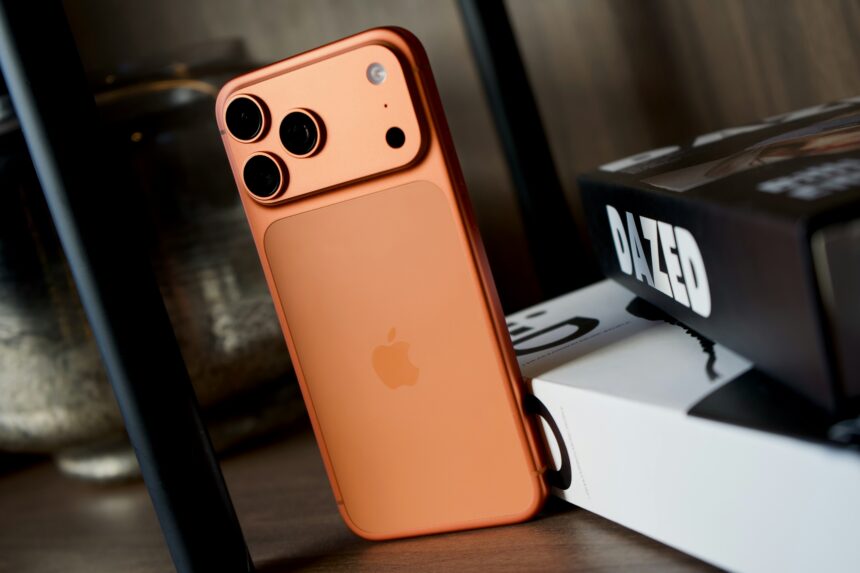

Apple unveils groundbreaking iPhone 17 AI features including Siri 2.0 and Visual Intelligence. Discover how the A19 chip and iOS 19 redefine smartphone power.
- Apple Intelligence reaches its peak
- Technical specs of the A19 and A19 Pro chips
- Comparison with Google and Samsung
- Privacy at the center of the AI revolution
- Market impact and analyst predictions
- Pricing and Availability
- What is next for Apple and AI?
- Key Takeaways of the iPhone 17 Announcement
- Conclusion
- Frequently Asked Questions
Apple just changed the smartphone landscape again during its highly anticipated February 2026 product event.
The tech giant revealed a suite of iPhone 17 AI features that promise to make every task faster and more intuitive.
These updates come at a pivotal time for the company as it seeks to maintain its lead in the global technology market. Investors responded immediately with a significant surge in stock price following the presentation.
The new capabilities represent the most significant shift in how people use their devices since the introduction of the multi touch screen.
The focus of the event remained squarely on what Apple calls “True Intelligence.” This new era of software uses the massive power of the A19 chip to process complex data without compromising user privacy.
For tech enthusiasts and everyday consumers alike, the announcement offers a glimpse into a future where your phone understands your world better than ever before.
From advanced photo editing to a digital assistant that actually knows your schedule, these iPhone 17 AI features set a new standard for the industry.
Apple Intelligence reaches its peak
The core of the recent announcement centers on the evolution of Apple Intelligence. While previous versions introduced basic tools for writing and image generation, the latest iteration goes much further.
The iPhone 17 lineup utilizes a dedicated neural engine that can handle trillions of operations per second. This allows the device to run large language models directly on the hardware.
Users no longer need a constant internet connection to perform advanced tasks like translating long documents or creating custom graphics.
Apple emphasized that these iPhone 17 AI features are not just gimmicks. They are integrated into the operating system at every level. For example, the new Smart Prioritization system learns which notifications are most important to you throughout the day.
It can summarize a long thread of messages from your boss while letting social media pings wait until you are free. This subtle but powerful use of machine learning helps reduce digital fatigue for busy professionals.
Siri 2.0 and the Gemini partnership
One of the most talked about reveals at the event was the official debut of Siri 2.0. For years, users have asked for a more capable digital assistant that can handle complex and multi step requests.
Apple delivered by integrating Google Gemini technology into the backend of Siri for specific broad knowledge queries. However, the most impressive parts of the upgrade happen locally on the phone.
The new Siri features “On Screen Awareness,” which means it can see what you are doing in any app. If a friend sends you a message about a flight, you can simply say “Siri, add this to my calendar” without leaving the chat.
The assistant understands the context of the conversation and the details on the screen. This level of personal context is a primary part of the iPhone 17 AI features that Apple believes will win over skeptics.
Visual Intelligence and the Camera Control evolution
The physical design of the iPhone 17 remains familiar, but the Camera Control button has received a massive software boost. Apple introduced “Visual Intelligence,” a feature that acts as a portal to the world around you.
By holding the button while pointing the camera at a restaurant, you can instantly see the menu, reviews, and reservation options. This happens through a seamless overlay that does not require you to take a photo or open a separate app.
Visual Intelligence also works for educational purposes. Students can point their iPhone at a complex math problem or a historical landmark to get detailed explanations or context.
Because these iPhone 17 AI features rely on the A19 Pro chip in the higher tier models, the response time is nearly instantaneous. This capability directly competes with similar offerings from Google and Samsung but with a focus on privacy and speed.

Technical specs of the A19 and A19 Pro chips
To power these advanced capabilities, Apple developed the A19 family of processors. These chips are built using an advanced three nanometer process that increases efficiency while boosting raw performance.
The standard A19 chip found in the base iPhone 17 includes a six core CPU and a five core GPU. However, the real star is the sixteen core Neural Engine, which is the fastest ever put into a mobile device.
The Pro and Ultra models take things even further with the A19 Pro. This version includes “Neural Accelerators” integrated directly into the GPU cores.
This hardware architecture is specifically designed to handle the heavy math required for generative AI. With 12GB of RAM as the new standard for Pro models, the iPhone 17 AI features run without any lag even when multitasking.
Memory bandwidth and AI efficiency
A major bottleneck for many AI applications is memory speed. Apple addressed this by increasing the memory bandwidth on the iPhone 17 series. This allows the Neural Engine to access the data it needs much faster than in previous generations.
Analysts like Ming Chi Kuo have noted that this hardware upgrade is what truly enables the “Personal Context” features to work without draining the battery.
The efficiency of the A19 chip also means the phone stays cooler during intense tasks. Whether you are rendering an AI generated video or playing a high end game with ray tracing, the thermal management is superior.
Apple claimed during the event that the iPhone 17 can maintain peak performance for forty percent longer than the iPhone 16. This is crucial for users who rely on their phones for professional creative work.
Comparison with Google and Samsung
Apple is not the only player in the artificial intelligence race. Google and Samsung have been pushing their own “Galaxy AI” and “Gemini” features for several years.
However, the iPhone 17 AI features distinguish themselves through deep ecosystem integration. While Google excels at cloud based search and generative tools, Apple focuses on the local experience.
Hardware vs Software dominance
The Google Pixel 10 Pro XL recently launched with the Tensor G5 chip.
While the Tensor chip is excellent for specific AI tasks, benchmarks show that the Apple A19 leads in raw processing power.
Samsung’s Galaxy S26 Edge also offers impressive AI features like live translation for phone calls.
Apple has matched this with its own “Live Translate” but added a layer of security that ensures no audio data ever leaves the device.
| Feature | iPhone 17 Pro | Google Pixel 10 Pro | Samsung Galaxy S26 |
| Primary AI Chip | A19 Pro | Tensor G5 | Snapdragon 8 Elite |
| RAM (Standard) | 12GB | 16GB | 12GB |
| Assistant | Siri 2.0 | Gemini | Bixby/Gemini |
| Visual Search | Visual Intelligence | Google Lens | Circle to Search |
| Processing | Mostly Local | Cloud/Local Mix | Cloud/Local Mix |
As shown in the data above, the competition is fierce. Google offers more RAM which can be helpful for specific large models.
Yet, Apple’s tight control over both the hardware and the software often results in a smoother user experience.
The iPhone 17 AI features feel like a natural extension of the phone rather than a separate set of tools.

Privacy at the center of the AI revolution
One major concern for consumers is how much data these AI tools collect. Apple has made privacy a central theme of its marketing for years.
With the iPhone 17, they introduced “Private Cloud Compute.” This technology ensures that if a task is too large for the phone to handle alone, it is sent to an Apple server that is just as secure as the device itself.
Your personal data is never stored on these servers. It is used only to fulfill the request and then immediately deleted. This approach stands in contrast to some competitors who may use user data to train their models.
For many Apple enthusiasts, this commitment to security is the most important part of the iPhone 17 AI features. It allows users to enjoy the benefits of a smart assistant without feeling like they are being watched.
On device processing vs Cloud processing
By performing the majority of tasks on the device, Apple also improves the speed of its AI. When you ask Siri to summarize a note, the work happens right on your phone.
This means the feature works even if you are on a plane or in a basement with no signal. The local nature of these iPhone 17 AI features is a significant technical achievement that requires a perfect balance of power and efficiency.
Market impact and analyst predictions
The financial world took immediate notice of the February event. Apple stock saw a three percent rise within hours of the announcement.
Analysts believe that the new AI capabilities will drive a massive upgrade cycle. Many users who have held onto older iPhones for four or five years may finally find a reason to switch.
Expert commentary from the industry
Mark Gurman of Bloomberg noted that this event marks the “second birth” of the iPhone. He argues that while the hardware design has become iterative, the software leap is transformational.
Ming Chi Kuo also released a report suggesting that Apple has secured enough components to meet the expected high demand for the iPhone 17 Pro.
He predicts that the Pro models will account for over sixty percent of total sales due to the exclusive AI capabilities of the A19 Pro chip.
Consumer surveys also show a growing interest in mobile AI. Nearly seventy percent of current iPhone owners say they plan to upgrade to the iPhone 17 within the next twelve months.
The combination of the new ultra thin “iPhone Air” model and the powerful iPhone 17 AI features creates a compelling reason for consumers to spend their money.
Pricing and Availability
Apple confirmed that the iPhone 17 lineup will be available for preorder starting later this month. The pricing remains competitive despite the expensive new technology inside.
The standard iPhone 17 starts at 799 dollars, while the new iPhone 17 Air begins at 899 dollars. The premium Pro and Pro Max models start at 999 dollars and 1,199 dollars respectively.
Launch dates and global markets
The first wave of shipping will begin in early March for most major markets including the United States, United Kingdom, and China.
Apple is also planning a secondary launch in more regions by late April. For those eager to try the latest iPhone 17 AI features, the iOS 19 public beta is expected to arrive shortly after the first devices land in the hands of consumers.

What is next for Apple and AI?
The February event was just the beginning. Apple hinted at even more features coming to the Vision Pro and the Mac lineup later this year.
The company is clearly betting its future on the idea that artificial intelligence should be helpful, private, and easy to use. As developers start to build apps that utilize the new Neural Engine, the possibilities will only expand.
We might see third party apps that can automatically edit professional videos or write complex code using the iPhone 17 AI features.
The ecosystem is prepared for a wave of innovation that could change how we work and play. Apple has set the stage, and the rest of the industry will now have to play catch up.
Key Takeaways of the iPhone 17 Announcement
- Siri 2.0: A massive upgrade with on screen awareness and personal context powered by local models and Google Gemini.
- Visual Intelligence: A new tool for the Camera Control button that identifies objects, places, and text in real time.
- A19 Pro Chip: Leading performance with a sixteen core Neural Engine designed specifically for generative tasks.
- Privacy Focus: Use of Private Cloud Compute ensures that user data is never stored or shared with Apple.
- New Design: The introduction of the iPhone 17 Air brings an ultra thin option to the flagship lineup.
- Market Surge: Positive reaction from investors and analysts points to a record breaking year for Apple.
Conclusion
The announcement of the iPhone 17 AI features represents a defining moment for modern technology. Apple has successfully moved beyond the era of simple apps and entered the world of proactive intelligence.
By combining the power of the A19 chip with a deep respect for user privacy, the company has created a product that feels both futuristic and essential.
Whether you are a professional looking for better productivity or a casual user wanting better photos, the iPhone 17 has something to offer.
As we move through 2026, the impact of these changes will become even clearer. The smartphone is no longer just a communication tool; it is a truly intelligent companion.
With the iPhone 17 AI features leading the way, the future of mobile technology looks brighter and more capable than ever before.
Keep an eye on our site for more updates as we get our hands on the devices for a full review.
Frequently Asked Questions
- Which models support the new iPhone 17 AI features?
- All models in the 17 series support basic Apple Intelligence. However, advanced features like Visual Intelligence and Siri 2.0 with On Screen Awareness perform best on the iPhone 17 Pro, Pro Max, and the new iPhone 17 Air due to the A19 Pro chip and increased RAM.
- Is the new Siri powered by ChatGPT or Google Gemini?
- Apple has a partnership with Google to use Gemini for broad, general knowledge questions that the local phone cannot answer. Most personal tasks and context heavy requests are handled locally by Apple’s own models to ensure privacy.
- Do I need an internet connection for these AI tools?
- No, one of the main advantages of the iPhone 17 AI features is that many of them run locally on the device. You can translate text, summarize notes, and use the Image Playground without any data or Wi-Fi connection.
- How does Visual Intelligence differ from Google Lens?
- While they perform similar tasks, Visual Intelligence is integrated directly into the hardware via the Camera Control button. It provides a faster, system wide experience and uses Apple’s private processing to ensure your location and camera data remain secure.
- Will these features come to older iPhones?
- Some features of Apple Intelligence will work on the iPhone 15 Pro and iPhone 16 series. However, the most advanced iPhone 17 AI features require the specific hardware architecture of the A19 chip to run effectively.