

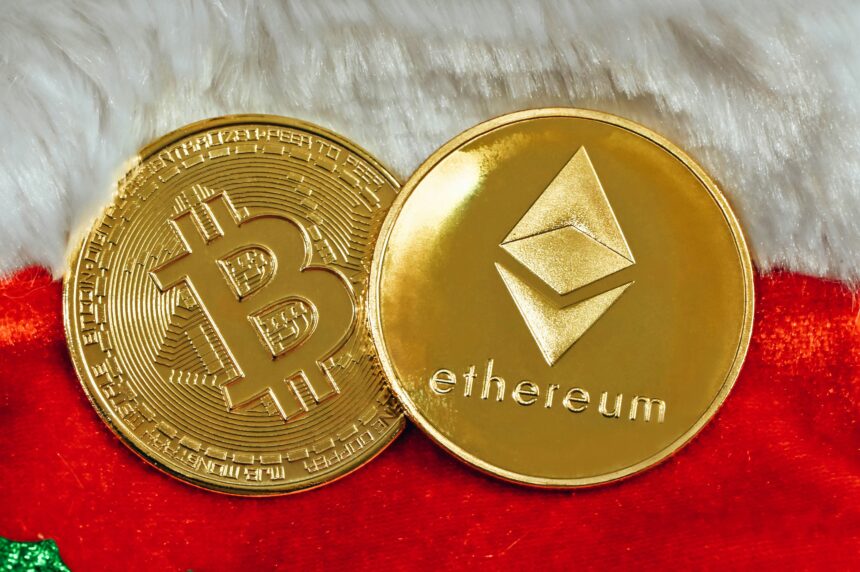

Explore the key differences between Bitcoin and Ethereum in 2026. Learn about digital gold, smart contracts, and the future of the decentralized economy.
The year 2026 has brought a new era of maturity to the digital asset market.
For years, people treated the entire crypto space as one giant experiment. Today, that has changed.
Institutional investors, global banks, and everyday savers now view the industry through a much clearer lens.
At the top of this ecosystem stand two giants that define what a blockchain can be.
Understanding the debate of Bitcoin vs Ethereum is the first step for anyone looking to navigate the modern financial landscape.
While thousands of smaller tokens exist, these two assets represent the vast majority of the market value.
As of early February 2026, Bitcoin remains the king of value, while Ethereum continues its reign as the king of utility.
Despite a recent market dip that saw Bitcoin drop toward the 77,000 dollar mark, the fundamental reasons to hold these assets have never been stronger.
They serve different purposes, use different technologies, and attract different types of believers.
THE CORE PHILOSOPHY OF BITCOIN
Bitcoin was born in 2009 as a response to the global financial crisis. Its creator, the mysterious Satoshi Nakamoto, wanted to build a system that did not rely on banks or governments.
The core goal was simple: to create a “peer to peer electronic cash system.” Over time, however, the narrative shifted. Most people in 2026 do not use Bitcoin to buy a cup of coffee.
Instead, they use it as a way to protect their wealth from inflation. This is why Bitcoin is often called “Digital Gold.” Just like physical gold, there is a limited supply.
Only 21 million Bitcoins will ever exist. This absolute scarcity is enforced by code, not by a central bank.
In a world where governments can print unlimited amounts of paper money, a fixed supply is incredibly attractive.
Bitcoin is designed to be hard to produce, easy to verify, and impossible to censor. It is the ultimate “slow and steady” asset of the crypto world.

THE WORLD COMPUTER: WHAT IS ETHEREUM?
If Bitcoin is a digital vault for your money, then Ethereum is the entire internet built on top of a blockchain. To know more about Ethereum.
Launched in 2015 by Vitalik Buterin and a team of developers, Ethereum was designed to be much more than a currency.
It introduced the concept of “smart contracts.” These are pieces of code that execute automatically when certain conditions are met. This small change opened a massive door to a new world of decentralized applications.
In 2026, Ethereum is the foundation for almost everything happening in the blockchain space.
It powers decentralized finance platforms where you can lend or borrow money without a bank. It supports the tokenization of real world assets like real estate and carbon credits.
While Bitcoin is content with being a store of value, Ethereum wants to be the infrastructure for a new, fairer internet.
It is a vibrant, bustling city of code that never sleeps.
COMPARING THE TECHNICAL FOUNDATIONS
The most significant technical difference between these two pillars is how they secure their networks. For the first decade, both used a system called Proof of Work.
This required massive amounts of electricity and powerful computers to solve complex math problems. Bitcoin still uses this method today.
Supporters argue that this high energy cost is exactly what makes Bitcoin the most secure network in history. It is physically expensive to attack the network, which keeps the data safe.
Ethereum took a different path in late 2022 by switching to Proof of Stake. Instead of using electricity, the network is secured by users who “stake” or lock up their ETH tokens.
This reduced the energy consumption of Ethereum by more than 99 percent. In 2026, this move has made Ethereum a favorite for ESG focused investors and large corporations who need to meet strict carbon footprint goals.
While Bitcoin is a fortress of raw power, Ethereum is a high efficiency machine optimized for scale.
THE 2026 MARKET DYNAMICS
The current market environment in February 2026 is one of caution and consolidation.
Bitcoin recently experienced a sharp correction from its 2025 highs, falling below the 80,000 dollar support level.
This move was triggered by changes at the Federal Reserve and new inflation data. However, institutional demand remains robust.
The iShares Bitcoin Trust and other spot ETFs have made it easy for pension funds and 401k holders to add “Digital Gold” to their portfolios without the hassle of managing private keys.
Ethereum is also finding its footing in this new institutional landscape. While its price has hovered around 2,300 to 2,700 dollars recently, its network activity is at an all time high.
The expansion of Layer 2 networks like Arbitrum and Base has made Ethereum transactions cheaper than ever. This allows millions of people to use the network without paying the high “gas fees” that plagued the system in previous years.
The focus in 2026 has shifted from price speculation to actual usage.

UPCOMING UPGRADES: GLAMSTERDAM AND HEGOTA
Ethereum developers are not standing still. The 2026 roadmap features two major upgrades known as Glamsterdam and Hegota.
Glamsterdam, expected in the first half of the year, focuses on “parallel processing.” This will allow the network to handle multiple transactions at the same time, significantly increasing speed.
It also includes improvements to how blocks are built, making the network even more resistant to censorship by large entities.
The second upgrade, Hegota, arrives later in the year. This phase is designed to tackle “technical debt” and data growth.
It aims to make running a node easier, ensuring that Ethereum remains decentralized even as it grows to handle billions of users.
Bitcoin, by contrast, rarely undergoes major upgrades. This is intentional. The Bitcoin community values stability and predictability above all else.
They believe that a global reserve asset should not change its rules frequently.
INSTITUTIONAL ADOPTION IN 2026
One of the biggest stories of 2026 is the concentration of capital. We are no longer in the “wild west” phase where thousands of projects compete for attention.
Instead, money is flowing toward the two assets with the clearest utility and strongest legal standing.
Regulated exchanges are becoming financial super apps, offering everything from stock trading to crypto staking in a single interface.
The “Clarity Act” and other pieces of legislation have provided a framework for how these assets are treated by the law.
This has given big name institutions the confidence to move from “testing” to “production scale.” We are now seeing tokenized treasuries and money market funds living directly on the Ethereum blockchain.
Meanwhile, Bitcoin has secured its spot as a primary treasury reserve asset for several Fortune 500 companies.
KEY DIFFERENCES AT A GLANCE
The following table summarizes the main points of comparison for these two crypto pillars as of early 2026.
| Feature | Bitcoin (BTC) | Ethereum (ETH) |
| Primary Goal | Digital Gold / Store of Value | World Computer / Utility Layer |
| Max Supply | 21 Million (Fixed) | No Hard Cap (Deflationary potential) |
| Security Model | Proof of Work (Mining) | Proof of Stake (Staking) |
| Transaction Speed | Slow (5 to 7 per second) | Medium (High with Layer 2) |
| Programmability | Low (Focused on security) | Very High (Smart Contracts) |
| Main Upgrades | Rarely changes | Twice yearly planned upgrades |
| 2026 Focus | Institutional Treasury Reserve | Decentralized Finance and RWAs |

THE ROLE OF LAYER 2 SOLUTIONS
To understand Bitcoin vs Ethereum in 2026, you must also understand Layer 2. These are secondary networks that sit on top of the main blockchain.
They handle the “heavy lifting” of transactions and then settle the final results back to the main chain. For Ethereum, this has been a game changer.
Networks like Optimism and ZKsync have brought transaction costs down to pennies, making the network accessible to everyone.
Bitcoin is also seeing growth in its own second layer. The Lightning Network continues to grow for small payments, while new “BitVM” and “Inscriptions” projects are bringing some smart contract functionality to Bitcoin.
While Bitcoin will likely never be as flexible as Ethereum, these innovations allow it to expand its use cases without compromising its core security.
This convergence of technology is one of the most exciting trends of the current year.
DECENTRALIZED FINANCE AND TOKENIZATION
The Ethereum ecosystem is where the future of finance is being built. In 2026, “Real World Assets” or RWAs have become a multi billion dollar sector.
This involves taking an asset like a piece of art or a building and representing it as a token on the Ethereum blockchain.
This allows for fractional ownership and makes these assets easier to trade and use as collateral.
Bitcoin plays a role here too, but primarily as the “ultimate collateral.” Because Bitcoin is seen as the most secure asset, it is often used as the “base layer” for loans and other financial products in the DeFi space.
Even if you are using an Ethereum app, the value backing your loan might actually be Bitcoin that has been bridged over.
The two pillars are increasingly working together to create a more efficient financial system.
REGULATION AND THE GLOBAL OUTLOOK
Government policy remains a major factor in the Bitcoin vs Ethereum debate. In 2026, the global landscape is a mix of encouragement and oversight.
Some regions have embraced these assets as a way to attract tech talent and capital. Others remain cautious, focusing on consumer protection and anti money laundering rules.
The introduction of the “Genius Act” in the United States has added a layer of credibility to stablecoins, which mostly run on the Ethereum network.
This regulatory clarity has been a double edged sword. While it has allowed for more adoption, it has also led to more centralization.
Large banks now act as custodians for most of the Bitcoin and Ethereum held by the public. For the “cypherpunks” who started the movement, this is a compromise.
However, for the average person in 2026, it means they can finally interact with these assets through a familiar and safe environment.
KEY TAKEAWAYS FOR 2026
- Store of Value: Bitcoin remains the primary choice for those looking to protect their wealth over the long term.
- Smart Contracts: Ethereum is the dominant platform for developers building apps and financial products.
- Energy Efficiency: Ethereum’s move to Proof of Stake has made it the “green” choice for corporate adoption.
- Institutional Era: Spot ETFs and new regulations have brought crypto into the mainstream financial fold.
- Technological Growth: Upgrades like Glamsterdam ensure that Ethereum continues to scale and evolve.
- Market Correction: The February 2026 price dip is seen by many as a healthy “reset” after a massive rally in 2025.
CONCLUSION
The debate of Bitcoin vs Ethereum is not about which one will “win.” In 2026, it is clear that both are here to stay. They serve different roles in a diversified portfolio.
Bitcoin provides the rock solid foundation of digital scarcity, while Ethereum provides the innovative engine for the digital economy.
Just as a modern portfolio might include both physical gold and technology stocks, a modern digital portfolio often includes both of these pillars.
As we look toward the rest of 2026, the focus will remain on adoption and utility. The infrastructure is now in place for these networks to handle millions of daily users.
Whether you are interested in the “Digital Gold” properties of Bitcoin or the “World Computer” potential of Ethereum, the opportunities have never been more accessible.
Stay informed, use secure wallets, and remember that the journey of decentralized finance is still in its early chapters.
FREQUENTLY ASKED QUESTIONS
- Is Bitcoin better than Ethereum?
- Neither is “better” in an absolute sense. Bitcoin is superior as a simple, secure store of value with a fixed supply. Ethereum is superior for building complex applications and financial systems. Your choice depends on your goals as an investor or user.
- Why did Bitcoin price drop in early 2026?
- The drop was caused by a combination of high inflation data, changes in Federal Reserve leadership, and profit taking after the record highs of 2025. Many analysts view this as a typical correction within a broader bull market cycle.
- What is the Glamsterdam upgrade?
- Glamsterdam is a major Ethereum network upgrade scheduled for the first half of 2026. It introduces parallel processing and improvements to block construction to make the network faster and more efficient
- Can I earn interest on my Bitcoin and Ethereum?
- Yes. You can earn “staking” rewards on Ethereum by helping to secure the network. For Bitcoin, you can earn yield by lending it out through regulated platforms or decentralized finance protocols.
- How do I safely buy these assets in 2026?
- The safest way is through regulated exchanges that offer “Proof of Reserves.” You can also buy Bitcoin and Ethereum through spot ETFs in your brokerage account, which avoids the need to manage your own digital keys.