
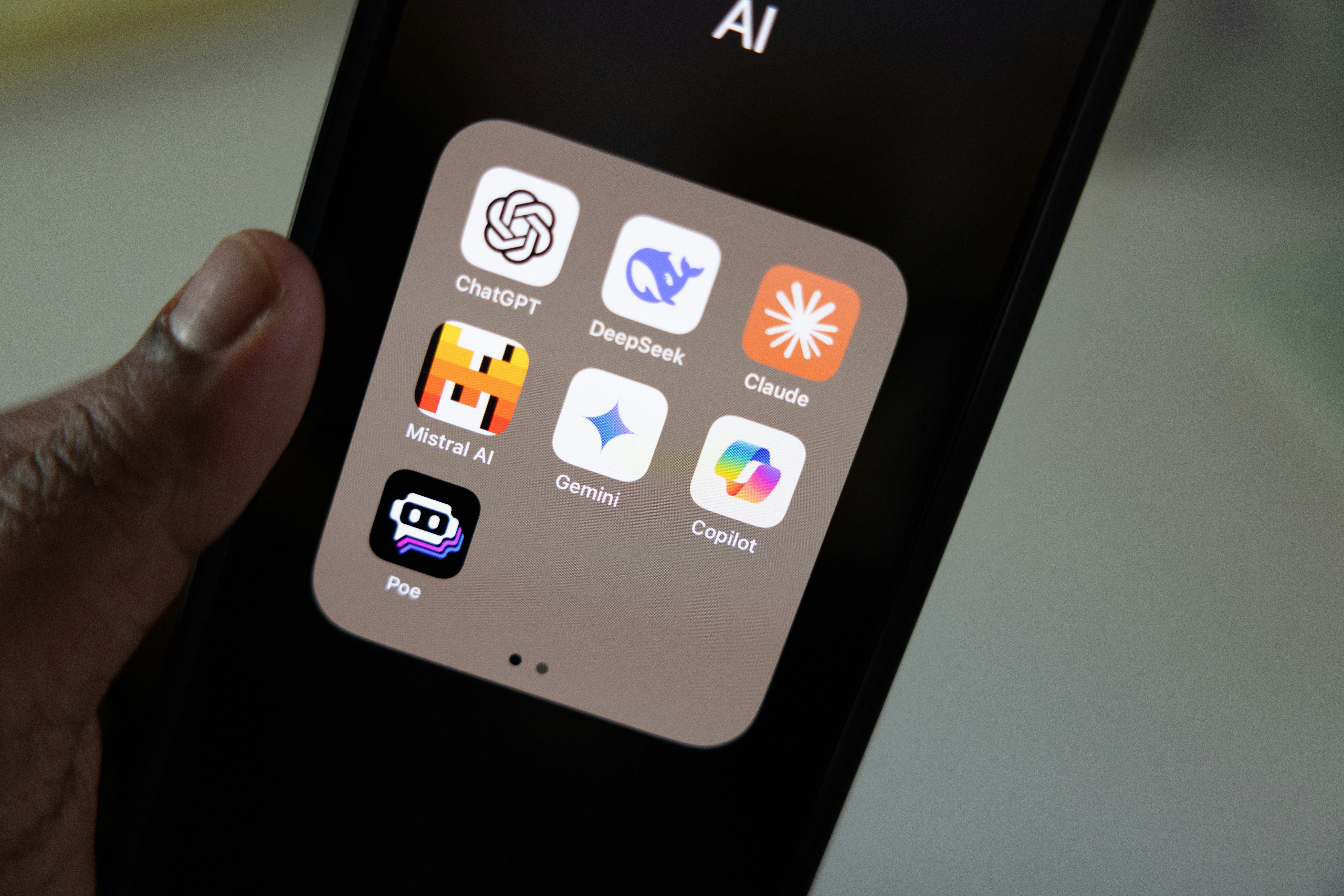

A deep dive into the 2026 AI landscape: comparing the dominance of OpenAI’s GPT 5: Anthropic’s Claude 4 series: and Google’s Gemini 3 Deep Think.
By February 2026: the “AI Race” is no longer a sprint for smarter chatbots. It has evolved into a global struggle for the “Agentic Operating System.”
We have moved past the era of mere text generation and into the age of Autonomous Agents: software entities that do not just talk but actually “do.”
The landscape is dominated by three titans: OpenAI: Anthropic: and Google. While 2024 was defined by “vibes” and 2025 by “reasoning:”
2026 is defined by Utility plus Safety plus Scale. Each of these companies has carved out a distinct territory.
Yet they are currently locked in a “Winner Take All” battle that involves multi trillion dollar data centers and prime time Super Bowl advertising.
THE 2026 POWER RANKINGS: AT A GLANCE
| Feature | OpenAI | Anthropic | |
| Flagship Model | GPT 5.3 Codex | Claude Opus 4.6 | Gemini 3 Deep Think |
| Primary Strength | Consumer Reach plus Coding | Enterprise Trust plus Agents | Data Moat plus Distribution |
| Monetization | Ads plus Premium Subs | Pure Subscription plus API | Ecosystem Integration |
| Current Valuation | $500B (Est. Private) | $350B (Latest Round) | Part of $3T Alphabet |
| 2026 Strategy | “AI for Everyone” (Ad Support) | “The Professional Moat” | “The Helpful Assistant” |
OPENAI: THE CONSUMER KING ON THE DEFENSIVE
OpenAI remains the most recognizable name in the industry. As of February 2026: ChatGPT boasts over 1.2 billion monthly active users.
However: the company is currently at a crossroads. The launch of GPT 5.3 Codex on February 5: 2026: was a masterstroke in raw performance:
yet it came alongside a controversial announcement: the introduction of an Ad Supported Tier.
THE “AD SUPPORTED” CONTROVERSY
To fuel the massive $74 billion in projected losses through 2028: OpenAI has begun testing “Sponsored Responses” within the free version of ChatGPT.
If you ask for a restaurant recommendation: you might receive a sponsored suggestion from a local partner.
This move has polarized the user base: allowing competitors to attack OpenAI’s “Neutrality.”
THE TECHNOLOGY: GPT 5.3 CODEX
Technically: OpenAI is still the “Math and Code” champion. The 5.3 Codex model is the first to truly merge the reasoning capabilities of the “o” series with the creative flexibility of GPT.
It is currently the highest performing model on the “Codeforces” leaderboards: with a 71% market share among professional software engineers.
“OpenAI is betting that the world wants AI to be free and ubiquitous: even if it means seeing an ad for a dating site in the middle of a coding session.”

ANTHROPIC: THE ENTERPRISE GIANT AND THE “SAFETY MOAT”
Anthropic: once the “scrappy underdog” founded by ex OpenAI employees: has become the preferred choice for the Fortune 500.
Their strategy is the inverse of OpenAI’s: they are doubling down on Privacy plus No Ads plus Professional Workflows.
THE RISE OF CLAUDE 4.6
With the release of Claude Opus 4.6 and the subsequent Sonnet 4.6 on February 17: 2026: Anthropic has successfully targeted the “Human in the Loop” market.
While OpenAI focuses on speed: Anthropic focuses on Agentic Consistency. Their “Claude Code” tool now commands 42% of the enterprise coding market: largely because it has fewer “hallucinations” in complex legal and medical environments.
THE “AD FREE” MARKETING GRENADE
Anthropic’s recent Super Bowl ad campaign famously mocked “Ad Supported AI.” The commercial showed a “Therapy Bot” suddenly trying to sell a credit card to a crying user.
This “Safety First” branding has allowed them to capture 32% of the enterprise LLM market: a complete inversion from two years ago when OpenAI was the default choice.
MCP: THE NEW STANDARD
Perhaps Anthropic’s biggest win is the Model Context Protocol (MCP). They have successfully positioned MCP as the industry standard for how AI “talks” to enterprise data.
Even Google and Microsoft have been forced to adopt it: proving that Anthropic is now the “Architect” of the enterprise AI infrastructure.
GOOGLE: THE SLEEPING GIANT FINALLY WAKES
For years: critics claimed Google was too slow to innovate. In 2026: that narrative has died. Google’s advantage is not just the model; it is the Ecosystem.
GEMINI 3 DEEP THINK
On February 12: 2026: Google released a massive update to Gemini 3 Deep Think. This model is specialized for “Hard Science plus Engineering.” While GPT 5 and Claude 4 are generalists: Deep Think is a specialist.
It recently set a new standard on the “Humanity’s Last Exam” benchmark: scoring 48.4% without any external tools.
THE DATA AND COMPUTE MOAT
Google remains the only player that owns the entire stack.
- TPUs: Google uses its own custom chips (Tensor Processing Units): making their “Inference” much cheaper than OpenAI’s Nvidia reliant clusters.
- YouTube plus Search: Gemini 3 has been trained on the most diverse dataset in history: including billions of hours of YouTube video data that OpenAI and Anthropic simply cannot access legally.
- UCP: The “Universal Commerce Protocol” launched by Google in January 2026 allows Gemini agents to buy products directly from Walmart and Shopify. This turns Google from a “Search Engine” into a “Transaction Engine.”

THE BATTLEGROUNDS: WHERE THE WAR WILL BE WON
1. AGENTIC COMMERCE
In 2026: we no longer “Google” products; we “Deploy” an agent. Google is winning this via UCP: but OpenAI is fighting back with its Cerebras partnership: aiming for “Zero Latency” agents that can negotiate prices in real time.
2. THE CODING REVOLUTION
This is a three way tie. Anthropic has the most “Proactive” agents (Claude Code): OpenAI has the best “Raw Logic” (Codex): and Google has the best “Integration” (AI Code Assist inside Google Cloud).
3. THE PROFITABILITY PROBLEM
Anthropic is the only one with a clear path to profitability by 2028: thanks to high margin enterprise contracts. OpenAI is burning cash at an unprecedented rate: while Google is hiding its AI costs inside its massive Advertising and Cloud revenue.
WHO IS WINNING IN 2026?
If you define “Winning” by Mindshare and Consumer Use: OpenAI is the winner. ChatGPT is the “Kleenex” of the AI world.
If you define “Winning” by Trust and Enterprise Dominance: Anthropic is the winner. They have successfully built a “Professional Grade” alternative that businesses are willing to pay a premium for.
If you define “Winning” by Future Stability and Data Moats: Google is the winner. Their integration into Android: Docs: and Search makes them “Un-deletable” from the modern digital life.
The real winners: however: are the users. The “Nuclear Competition” between these three giants has accelerated AI capabilities by a decade in just two years.
We are no longer waiting for AGI; we are living in the “Agentic Era”: and the race has only just begun.
FREQUENTLY ASKED QUESTIONS
- Is GPT 5 better than Claude 4?
- It depends on the task. GPT 5.3 Codex is widely considered superior for mathematical reasoning and complex code generation.
- Claude Opus 4.6 is preferred for long context “Deep Research” and nuanced brand voice writing.
- Why is Google Gemini 3 so focused on science?
- Google realized they could not win the “Social Chatbot” war against ChatGPT. Instead: they are focusing on becoming the “Scientific Co Pilot” for the world: helping researchers solve physics plus chemistry plus medical problems.
- Can I use these models for free?
- Yes. OpenAI offers a free tier (now ad supported): Anthropic offers Claude Sonnet for free with limits: and Google Gemini is free for all Google account holders: with an “Ultra” tier for subscribers.